Why You Should Discard Open Vials After 28 Days, Even If There’s Medicine Left
If you’ve ever looked at your medication, whether it’s a multi-use vial of GLP-1 medication or one of the injectable supplements we offer like B12, biotin, or lipo-shot, and thought, “This still looks fine… I don’t want to waste it,” you’re not alone.
We totally get it! These medications are valuable, and throwing away something that seems perfectly usable can feel counterintuitive.
But there’s a very good reason why manufacturers and your Flow Wellness provider recommend following your vial’s discard date, which is often 28 days after opening. It’s all about keeping you safe and making sure every dose you take remains as effective, stable, and clean as it’s meant to be.
Does the Medication Suddenly “Go Bad” on Day 29?
Not exactly. It doesn’t turn toxic or spoil overnight, but two important factors determine how long you can safely use an open vial.
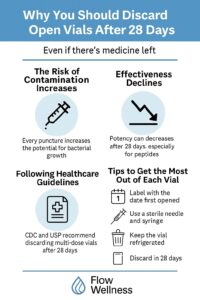
1. The Risk of Contamination Increases
Once you puncture a vial, even just once, you introduce a small risk of contamination. Every time a needle enters the vial, even with proper technique, there’s a chance of introducing bacteria.
Over time, repeated access creates more opportunities for contamination. If bacteria enter the vial, you could inject them directly into your body, potentially causing serious infections or illness.
Preservatives, if included in the vial, may help prevent bacterial growth, but they don’t eliminate the risk of contamination.
Please note that single-use vials, including single-dose Zepbound vials, should be discarded after one use.
2. It’s Not Just About Sterility. It’s Also About Stability.
GLP-1 medications are peptide-based, which means storage conditions, temperature, and handling can affect their stability.
Even when you store medications correctly, manufacturers and pharmacies can only guarantee their quality and stability for the period supported by their testing. The same principle applies to injectable supplements like B12, biotin, and lipotropic shots.
What does this mean for you?
Your medication may become less effective if it loses stability.
You may not receive the intended medication effect.
You may not get the full therapeutic benefit you’re expecting.
These changes aren’t always visible. There’s often no color change or cloudiness, but the medication’s quality may still be compromised.
So, while medication doesn’t automatically become dangerous on day 29, using it beyond its recommended discard date creates unnecessary risks.
Is This Just a Manufacturer Rule?
Not at all. This is a widely accepted best practice in healthcare.
Organizations like the CDC and USP (United States Pharmacopeia) provide guidelines for safe medication handling.
The CDC recommends discarding multidose vials within 28 days after the first puncture unless the manufacturer specifies a different timeframe.
Some medications have shorter or longer in-use periods, so always follow the instructions for your specific medication.
Why We Follow This Guideline at Flow Wellness
At Flow Wellness, your safety and results are our top priorities. We follow evidence-based medication handling guidelines to ensure you’re getting the highest-quality care with the most reliable outcomes.
Even when it means tossing a bit of unused medicine, it’s worth it to protect your health and ensure every dose works as intended.
This Isn’t Just About Rules. It’s About Results.
We’re not being rigid. We’re protecting your progress.
Whether you’re using GLP-1 medications for weight loss or supplements to support energy and metabolism, staying consistent and safe with your dosing is key to getting the best results and avoiding setbacks.
We Understand: You Don’t Want to Waste What You Paid For
We hear this all the time, and we completely understand! These medications are valuable and are an investment in your health. Of course you want to get the most out of every vial.
If you’re consistently left with leftover medication, let’s talk. We may be able to:
Adjust your refill quantity or dosing schedule when appropriate
Explore smaller vial sizes
Make sure you’re drawing up accurate doses
Pro tip: Vials sometimes contain a little extra medication to allow for accurate dosing. Even if you use every scheduled dose, some liquid might remain, and that’s normal. That extra medication isn’t intended for use beyond the vial’s discard date.
Tips to Get the Most Out of Each Vial (Safely)
Label the vial with the date you first punctured it
Use a new, sterile needle and syringe each time
Clean the rubber stopper with alcohol before each puncture
Follow your medication’s specific storage instructions
Keep the vial properly sealed and stored
Discard your medication by its recommended discard date, no matter how it looks
Hove more questions? We’re Here for You
If you have questions about your medication, GLP-1 dosing, supplements, or safe storage practices, we’re just a call or message away.

What Does GLP-1 Maintenance Dosing Mean?
What’s the best GLP-1 maintenance dose? The frustrating answer is: we don’t know yours yet. Maintenance looks different for everyone. Some people need the same

GLP-1 Medications Can Protect Your Heart
GLP-1 medications started as diabetes treatments. Then they became powerful tools for weight loss. Now, certain GLP-1 medications may also help prevent heart attacks, strokes,

Is This Normal on GLP-1 Medications?
The Weird, Awkward, Surprisingly Common Things Nobody Warned You About If you’re taking a GLP-1 medication like Ozempic, Wegovy (semaglutide), Zepbound, or Mounjaro (tirzepatide), chances