
Are You Ready to Feel Like Yourself Again?
Testosterone Replacement Therapy (TRT) for Men in Bend, Seattle, and via telehealth in OR & WA
Testosterone replacement therapy (TRT) is a medically supervised treatment that restores healthy testosterone levels in men whose bodies no longer produce enough. At Flow Wellness, we use bioidentical testosterone, comprehensive lab testing, and truly personalized dosing to help you rebuild your energy, strength, focus, and confidence.
Testosterone is one piece of how men feel after 40 — metabolism, muscle, and sleep matter too. Our Stronger & Healthier After 40 program evaluates all of it over six months and builds a plan from your labs and scans.

2025 Finalist for Men’s Health Services
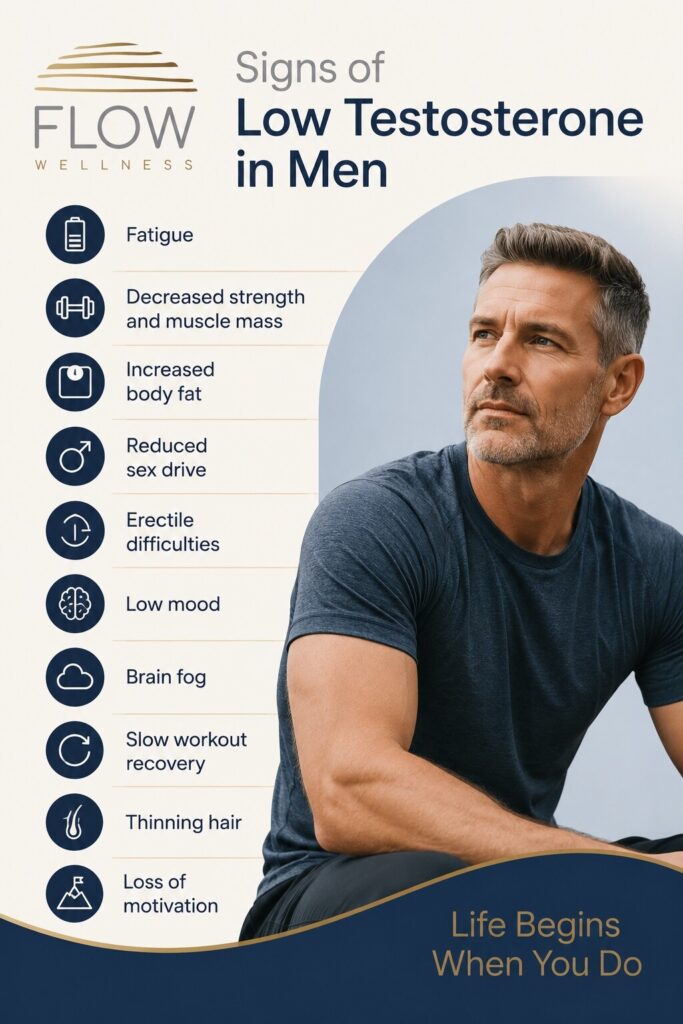
Signs of Low Testosterone in Men
Low testosterone rarely announces itself all at once. For most men it shows up gradually, as a slow drift away from feeling like yourself. Common signs of low testosterone include:
- Persistent fatigue and low energy, even after a full night’s sleep
- Decreased muscle mass and strength despite regular training
- Increased body fat, especially around the abdomen
- Reduced libido and sex drive
- Erectile difficulties or trouble maintaining erections
- Irritability, low mood, or increased anxiety
- Brain fog and difficulty concentrating
- Slower recovery from workouts
- Thinning hair or changes in hair growth patterns
- Loss of motivation and drive
If several of these sound familiar, your symptoms deserve a real answer, not a shrug about getting older. Testosterone levels naturally decline by about 1% per year starting around age 30, and many men begin feeling the effects in their late 30s or 40s. A simple blood panel can tell you whether low testosterone is contributing to how you feel.
Who Is a Good Candidate for TRT?
You may benefit from an evaluation if you have:
| Category | Common Symptoms of Low Testosterone |
|---|---|
| Energy & Mood |
|
| Sexual Health |
|
| Body & Performance |
|
What Is Testosterone and Why Does It Matter?
Testosterone is the primary male sex hormone, and its influence goes far beyond the bedroom. Produced mainly in the testes, testosterone regulates:
- Muscle mass and strength, including how effectively your body builds and maintains lean tissue
- Bone density, which protects you against fractures and osteoporosis as you age
- Sex drive and sexual function, including erectile quality and performance
- Energy and stamina, both physical and mental
- Mood stability and focus, since testosterone interacts directly with brain chemistry
- Body composition and metabolism, influencing where and how your body stores fat
- Red blood cell production, which affects endurance and recovery
When levels fall below the healthy range, most commonly measured as a total testosterone under roughly 300 ng/dL alongside symptoms, the effects ripple through every one of these systems. That combination of low labs plus real symptoms is what clinicians call hypogonadism, or more simply, low T.
What Is Testosterone and Why Does It Matter?

Testosterone is the primary male sex hormone, and its influence goes far beyond the bedroom. Produced mainly in the testes, testosterone regulates:
- Muscle mass and strength, including how effectively your body builds and maintains lean tissue
- Bone density, which protects you against fractures and osteoporosis as you age
- Sex drive and sexual function, including erectile quality and performance
- Energy and stamina, both physical and mental
- Mood stability and focus, since testosterone interacts directly with brain chemistry
- Body composition and metabolism, influencing where and how your body stores fat
- Red blood cell production, which affects endurance and recovery
When levels fall below the healthy range, most commonly measured as a total testosterone under roughly 300 ng/dL alongside symptoms, the effects ripple through every one of these systems. That combination of low labs plus real symptoms is what clinicians call hypogonadism, or more simply, low T.
What Is Testosterone Replacement Therapy?
Testosterone replacement therapy (TRT) restores your testosterone to a healthy, optimized range using carefully dosed, medically monitored treatment. The goal is not to push your levels sky-high. It is to return your body to the hormonal environment where you feel strong, clear, and fully engaged in your life.
At Flow Wellness we use bioidentical testosterone, meaning the molecule is structurally identical to the testosterone your body produces on its own. Your body recognizes it, absorbs it, and uses it the same way it uses its own hormone. Treatment is guided by your labs, your symptoms, and your goals, then adjusted over time as your body responds.
TRT Benefits: What You Can Expect
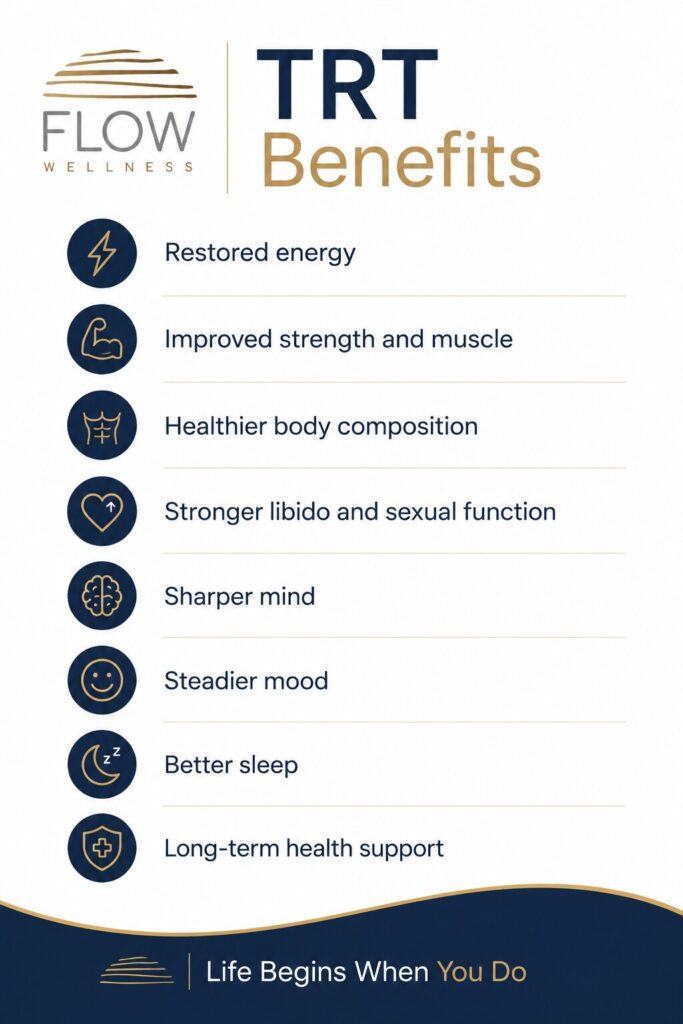
Men who begin TRT with genuinely low testosterone typically experience meaningful improvements across several areas of health:
- Restored energy: Less afternoon crash, more capacity for work, training, and family life
- Improved strength and muscle: Better response to resistance training and faster recovery between sessions
- Healthier body composition: Easier fat loss, particularly abdominal fat, when paired with nutrition and exercise
- Stronger libido and sexual function: Renewed desire and improved erectile quality
- Sharper mind: Clearer thinking, better focus, and improved memory
- Steadier mood: Less irritability, more patience, and a stronger sense of motivation
- Better sleep: Deeper, more restorative rest
- Long-term health support: Maintained bone density and metabolic function as you age
These benefits build over time. Which brings up the question nearly every patient asks first:
How Long Does TRT Take to Work?
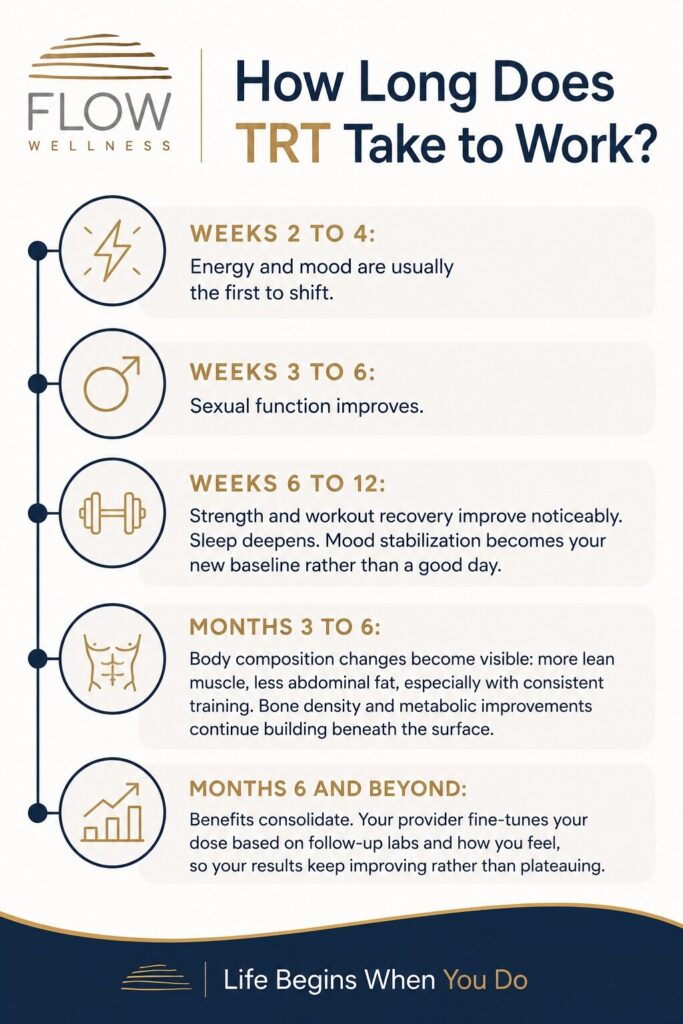
Most men notice the first changes within a few weeks, with full benefits developing over three to six months. Here is a realistic week-by-week picture:
Weeks 2 to 4: Energy and mood are usually the first to shift. Many men describe feeling more motivated and less irritable. Libido often begins to stir.
Weeks 3 to 6: Sexual function improves. Morning erections may return, and desire becomes more consistent. Mental clarity sharpens.
Weeks 6 to 12: Strength and workout recovery improve noticeably. Sleep deepens. Mood stabilization becomes your new baseline rather than a good day.
Months 3 to 6: Body composition changes become visible: more lean muscle, less abdominal fat, especially with consistent training. Bone density and metabolic improvements continue building beneath the surface.
Months 6 and beyond: Benefits consolidate. Your provider fine-tunes your dose based on follow-up labs and how you feel, so your results keep improving rather than plateauing.
Your timeline depends on your starting levels, delivery method, dose, and overall health. This is exactly why we monitor you closely during the first several months rather than writing a prescription and disappearing.
For a deeper dive, read our full Testosterone Replacement Therapy Timeline: What to Expect Week by Week.)


TRT Delivery Methods: Injections vs. Pellets vs. Creams
There is no single best way to take testosterone. The right method depends on your lifestyle, your preferences, and how your body responds. Flow Wellness offers all three major delivery options, including pellet therapy, which many clinics in our region do not provide.
Testosterone Injections
- Administered into muscle or subcutaneous fat, typically once or twice weekly
- Reliable, effective, and the most affordable option
- Levels rise and fall between doses, which some men feel and others never notice
- Best for men comfortable with self-injection who want proven results at a lower cost
Testosterone Pellets
- Small bioidentical pellets placed under the skin, usually in the upper glute, during a brief in-office procedure
- Release a steady, consistent stream of testosterone for 4 to 6 months
- No daily routine, no weekly injections, nothing to remember
- Best for men who want stable levels and minimal maintenance
Topical Creams and Gels
- Applied daily to the skin, delivering testosterone gradually
- Non-invasive and easy to adjust
- Requires consistent daily application and care to avoid skin transfer to partners or children
- Best for men who prefer a needle-free option and have a reliable daily routine
Your provider will walk you through the tradeoffs and help you choose the option that fits your life. Every method is monitored with follow-up labs and symptom tracking, and you can switch methods if your first choice is not the right fit.
Want strength, energy, and body composition tracked together, not just testosterone? Explore our comprehensive midlife health program.
TRT Lab Monitoring
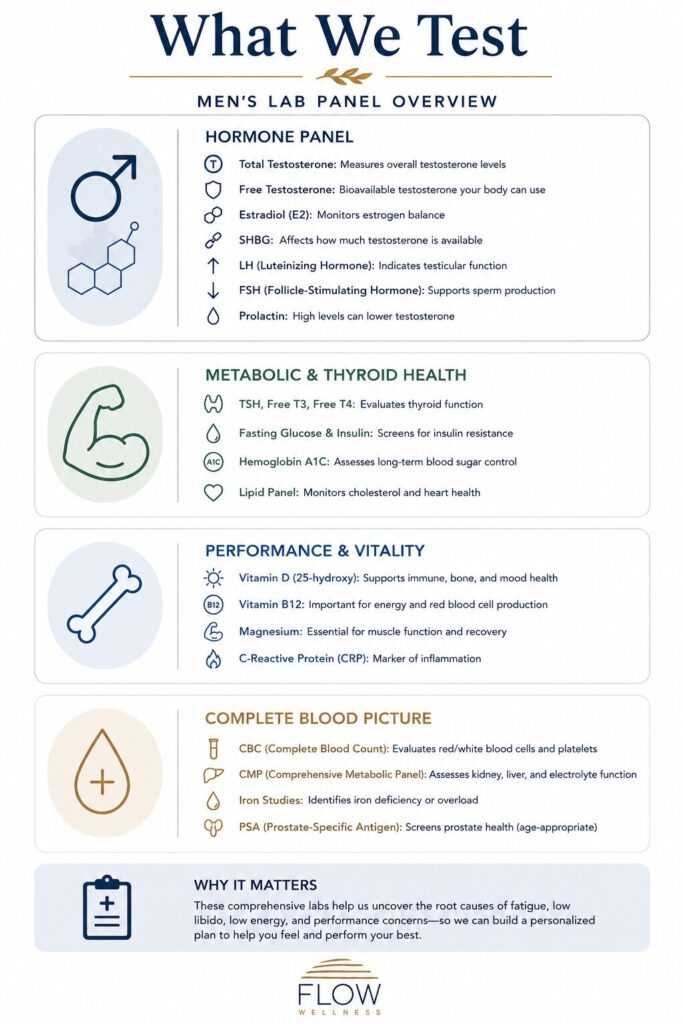
Test | Why We Monitor It |
|---|---|
Total Testosterone | Measures overall testosterone levels in your bloodstream. |
Free Testosterone | Measures the active testosterone available for your body to use. |
Estradiol (E2) | Monitors estrogen balance, which can affect mood, libido, and side effects during TRT. |
Sex Hormone Binding Globulin (SHBG) | Determines how much testosterone is bound versus biologically available. |
Luteinizing Hormone (LH) | Helps identify whether low testosterone originates from the testes or pituitary gland. |
Follicle-Stimulating Hormone (FSH) | Assesses testicular function and fertility potential when appropriate. |
Prolactin | Elevated levels can contribute to low testosterone, low libido, and erectile dysfunction. |
Complete Blood Count (CBC) & Hematocrit | Monitors red blood cell production and helps detect elevated hematocrit, a potential side effect of TRT. |
Comprehensive Metabolic Panel (CMP) | Evaluates kidney function, liver health, electrolytes, and overall metabolic status. |
Lipid Panel | Monitors cholesterol and cardiovascular risk factors. |
Prostate-Specific Antigen (PSA) (when appropriate) | Screens prostate health based on age, risk factors, and current guidelines. |
Hemoglobin A1C & Fasting Glucose | Assesses blood sugar control and metabolic health, which often influence hormone balance. |
Thyroid Panel (TSH, Free T3, Free T4) | Identifies thyroid disorders that can mimic symptoms of low testosterone. |
Vitamin D | Supports bone health, immune function, mood, and healthy testosterone production. |
Vitamin B12 (when appropriate) | Evaluates a common cause of fatigue, brain fog, and low energy. |
Iron Studies (when indicated) | Helps identify anemia or iron overload that may contribute to fatigue. |
Symptom Assessment | Your symptoms, energy, libido, mood, sleep quality, strength, body composition, and overall well-being are just as important as your lab values when optimizing treatment. |
What Is Pellet Therapy and How Does It Work?
Pellet therapy is the lowest-maintenance form of testosterone replacement. During a short office visit, your provider places small bioidentical hormone pellets, each about the size of a grain of rice, under the skin in the glute area. The pellets dissolve slowly, releasing a steady supply of testosterone over 4 to 6 months. There are no peaks and valleys, no weekly appointments, and nothing to apply or inject at home. When levels begin tapering, you simply schedule your next insertion.
Why Bioidentical Testosterone?
Flow Wellness uses bioidentical testosterone, which is molecularly identical to the hormone your body produces naturally. Because your body already knows this molecule, bioidentical testosterone integrates with your natural systems rather than overpowering them. The result is gentle, effective support that works with your physiology, dosed precisely to your labs and symptoms rather than a one-size-fits-all protocol.

How TRT Works at Flow Wellness

Step 1: We start with you. Your first visit is a full hour with an experienced clinician. We listen to your symptoms, your history, and your goals before we ever talk about treatment.
Step 2: Comprehensive lab testing. We test, we don’t guess. Your personalized lab panel goes well beyond total testosterone, giving us a complete picture of your hormone health, metabolic function, and safety markers like PSA and red blood cell count.
Step 3: Review and plan. A follow-up visit is included to walk through your results together. We read labs through the lens of wellness, not just disease screening. The question is not “are you technically normal” but “what does it take for you to feel strong, sharp, and fully alive.”
Step 4: Personalized treatment and ongoing monitoring. Your dosing plan is built around your labs, lifestyle, and response, then adjusted over time. Follow-up labs and regular check-ins keep your treatment safe, effective, and evolving with you.
Is TRT Safe? Monitoring, Fertility, and Common Concerns
TRT is safe for most men when it is properly prescribed and monitored. That monitoring is not optional at Flow Wellness. It is built into your care.
Fertility. Testosterone therapy can suppress sperm production while you are on it. If you are planning to have children now or in the future, tell your provider before starting. We discuss fertility goals at your first visit and can recommend alternative or complementary approaches that protect fertility while still addressing your symptoms.
Hair loss. TRT does not cause baldness on its own. In men genetically predisposed to male pattern hair loss, restoring testosterone can modestly accelerate a process that was already underway, because some testosterone converts to DHT. If hair is a concern, we monitor for it and can discuss management options.
Prostate health. Current evidence does not show that TRT causes prostate cancer, but we screen PSA before treatment and monitor it regularly as a standard safety practice. Men with active prostate cancer are not candidates for TRT.
Red blood cell count. Testosterone can raise red blood cell production. We track this with routine labs and adjust treatment if needed. We may recommend donating blood if red blood cell levels remain high.
Cardiovascular health. Properly dosed and monitored TRT has not been shown to increase cardiovascular risk in men with diagnosed low testosterone, and restoring healthy levels supports metabolic health. Your provider reviews your full cardiac history before treatment.
The pattern here is simple: nearly every risk associated with TRT is managed through appropriate screening, honest conversation, and consistent lab monitoring. That is exactly the care model Flow Wellness is built on.
Who Should Not Take TRT?
TRT may not be appropriate for everyone. Treatment is typically not recommended for men with:
- untreated prostate cancer
- breast cancer
- uncontrolled severe sleep apnea
- very high hematocrit
- those actively trying to conceive
- certain cardiovascular conditions
Your provider reviews your complete medical history before recommending treatment.
Conditions That Can Mimic Low Testosterone
Not every symptom is caused by testosterone. Your evaluation also considers:
- thyroid disorders
- sleep apnea
- depression
- chronic stress
- obesity
- vitamin deficiencies
- medication side effects
How Much Does TRT Cost?
TRT costs depend on your delivery method, dosing, and monitoring needs. At Flow Wellness, your initial consultation for $349 includes a one-hour visit with an experienced clinician, a personalized lab order, and a follow-up visit to discuss a comprehensive treatment plan.
Flow Wellness does not bill insurance. Working outside the insurance system is what allows us to offer hour-long appointments, direct provider messaging, cutting-edge treatments, and care decisions made between you and your clinician rather than a billing department. You get transparent pricing and the time and attention your health actually requires.
Ongoing treatment costs vary by method. Injections are typically the most economical, creams fall in the middle, and pellets carry a higher per-treatment cost offset by their convenience and 4 to 6 month duration. We will walk you through exact pricing for your recommended plan during your consultation, with no surprises.
Initial consult includes:
- One hour consultation with our experienced clinician
- Personalized lab order
- Follow up visit after labs to discuss a comprehensive treatment plan
- $349
Our Program:
Hormone optimization works best as an ongoing partnership, not a one-time prescription. The Thrive Monthly Membership includes:
- A dedicated provider focused on your health goals through monthly check-ins
- Unlimited provider messaging between visits
- Exclusive discounts on additional Flow Wellness services and medications
This ongoing support keeps your treatment personalized and your progress steady, so results compound over time instead of stalling. $189 per month.
Why Men Choose Flow Wellness Over Online TRT Clinics
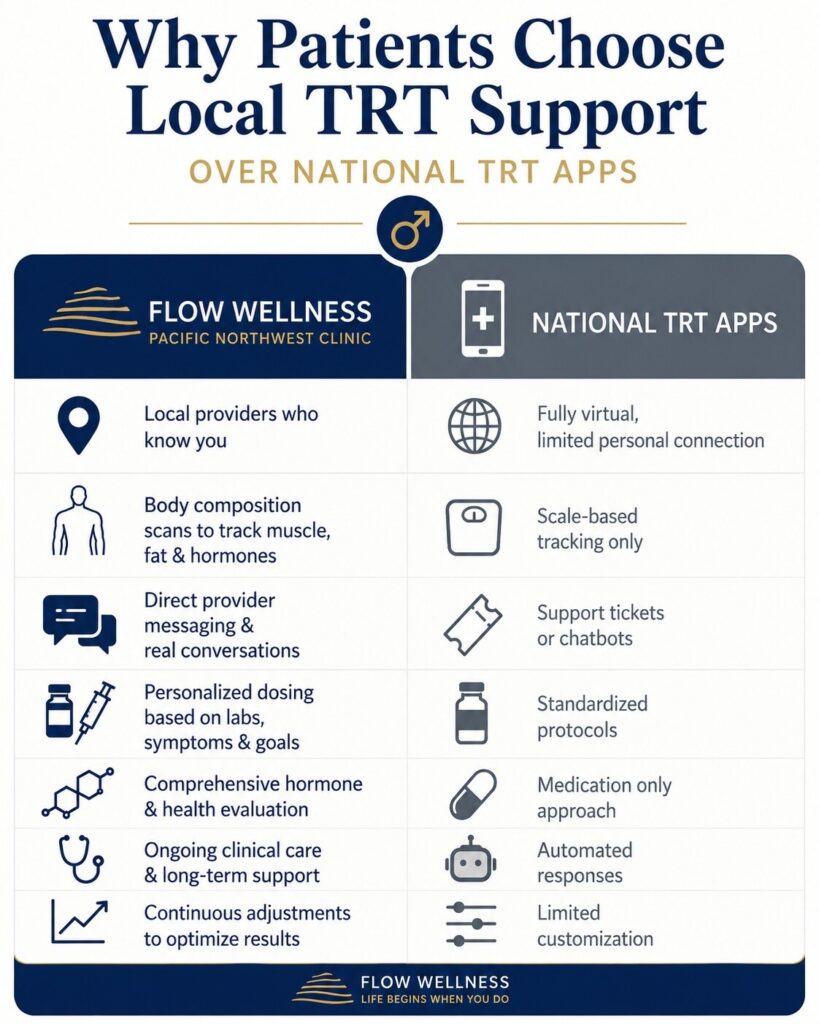
Online testosterone clinics have made TRT more accessible, but accessibility is not the same as care. Flow Wellness combines the convenience of telehealth with the depth of a real clinical relationship:
- Real appointments with real length: One-hour initial visits, not seven-minute video calls
- Comprehensive labs: Expanded panels that look at your whole hormonal and metabolic picture, not just a single testosterone number
- All three delivery methods: Injections, creams, and in-office pellet therapy, so your treatment fits your life
- In-person options: Clinic locations in Bend, Oregon and Seattle, Washington for men who want hands-on care
- Whole-person wellness: Body composition scans, peptide therapy, GLP-1 programs, and IV therapy under one roof, coordinated by providers who know your full history
- Direct communication: Message your provider when questions come up, without gatekeepers or ticket queues
TRT in Bend, Oregon
Our Bend clinic serves Central Oregon men who want in-person hormone care, from the first consultation through pellet insertions and follow-up labs. Bend’s active lifestyle is exactly why low testosterone hits hard here: when your energy, strength, and recovery decline, so does everything you love doing on the trails, the river, and the mountain. Our Bend team builds treatment plans around keeping you strong for the life you actually live.
TRT in Seattle, Washington
Our Seattle location brings the same personalized, unhurried TRT care to the Puget Sound area. Whether you prefer in-person visits or a hybrid of clinic care and telehealth, our Seattle providers deliver comprehensive lab work, all delivery method options, and ongoing monitoring designed around your schedule.
TRT via Telehealth in Oregon and Washington
Not near Bend or Seattle? Flow Wellness provides complete TRT care via telehealth across Oregon and Washington, including virtual consultations, local lab draws, medications shipped to your home, and the same direct provider communication our in-person patients receive.

5.0
5.0Top Rated Wellness ClinicVerified by TrustindexTrustindex verified badge is the Universal Symbol of Trust. Only the greatest companies can get the verified badge who has a review score above 4.5, based on customer reviews over the past 12 months. Read morePosted on Google
 Shelley Lewis-Leander5 days agoI was extremely impressed with Kerry, she explained and answered my concerns and questions. I felt very comfortable and supportive.Posted on Google
 Amy Margolis40 days agoVery professional, knowledgeable and extremely personable. Did not feel rushed and answered all my questions.Posted on Google
 Jenn Masse46 days agoI had questions, Jill had answers. I am really appreciative of the time Jill took with me to understand my background, validate how I was feeling, evaluate various options for care and chat about next steps. Thank you!Posted on Google
 Marti OI'Doherty55 days agoHad a very positive experience with Kerry. She answered all the questions I had. We went over my body composition scan. Loved their format. Easy to read and understand. Recommend Flow Wellness out of Bend Oregon. So glad I am using them for my weight loss journey and new life style changes.Posted on Google
 Jordan Schwartz55 days agoVictoria is the absolute best!! I have been thrilled with my experience so far and the attentiveness of this company.Posted on Google
 The Club Salon57 days agoGreat customer service the whole staff, Dr. Jones very easy to talk to and prompt on calls. Thank you.Posted on Google
 Hanna Drozd57 days agoAlways a pleasure to have a conversation with them. They are very accurate and professionalPosted on Google
 Joseph D'Angelo64 days agoExtremely professional and genuinely concerned about your health. I’m seeing Allison Jones now and she is excellent!Posted on Google
 Carol Manning67 days agoEveryone was so kind and very informative. I felt comfortable, feeling I was in good hands. I will be starting glp1 in a week, and so excited to see the results. Highly recommend!Posted on Google
 Colleen Lacter83 days agoThoughtful professionals. Extremely helpful!Posted on Google
 Gwendolyn Hamilton90 days agoVictoria was a dream to work with! I could not recommend her enough.Posted on Google
 Shelley Jones95 days agoFriendly and very knowledgeable staff!Posted on Google
 Marla Cummins98 days agoAll of the healthcare providers are very knowledgeable about the medication‘s being prescribed for weight loss. They also have a monthly publication that keeps us up-to-date on changes and new information regarding the medications. Kerry was my healthcare provider and she was Professional, empathetic, and knowledgeable. I was able to get a hold of her whenever I needed too with questions and concerns. She always responded promptly. I highly recommend Flow Wellness in Bend, Oregon.Posted on Google
 John Minor103 days agoGreat staff, comfortable environment, just signed up for monthy sessions ❤️Posted on Google
 Patrick Cabral127 days agoWhat a great business. I have been working with Flow Wellness for about 4 months and I find this company to be dedicated to the business of individual wellness. My treatment is managed by Holli Miller, FNP and it has been excellent. What I find refreshing is I have never been pushed on buying anything. Holli, like the Flow team provides me with options and recommendations which don't just focus on providing medicine but also lifestyle changes. They offer a host of services but again, never pushed. I feel comfortable in discussing my weight loss journey with the Flow team. If you read this, also check out the vast library of articles the Flow team have. I know weight loss is not just taking a shot and the Flow team with Holli don't just sell GLP-1s, they "provide" a plan and support for a successful wellness lifestyle. Highly recommend Flow to anyone. Even if you are just looking, there is NO pressure. Definitely worth a look.Posted on Google
 Adria Peet138 days agoVictoria Streetman was very helpful and professional! Looking forward to my Peptide journey!Posted on Google
 Angelina Anello-Dennee147 days agoI just did an initial intake and it was so lovely and thorough. I found the experience to be super welcoming, and gave me a lot of knowledge that I needed to make the decisions I wanted to make. Wonderful staff!Posted on Google
 Dennis Maddelein147 days agoVery positive first encounter with Flow Wellness. All the people I met were very courteous and attentive with a big smiles on their faces. I had my questions answered by Holly and I felt very comfortable. Happy to do business with flow wellness.Posted on Google
 chloe allen153 days agoGreat place! Everyone is so nice and very knowledgeablePosted on Google
 Katie Conner155 days agoVery nice relaxing place and all my questions answered and didn’t feel pressure in proceeding if I didn’t want to
Medically reviewed by Dr. Kevin Jones, MD, ABOM. Medical Director, Flow Wellness. Last reviewed July 2026
Dr. Jones has more than 15 years of emergency medicine experience and specializes in personalized wellness, hormone optimization, medical weight loss, and metabolic health.
Related Testosterone Replacement Resources

HRT and Peptides: Combining Therapies for Faster Results
Hormone replacement therapy restores your foundational hormonal balance, but peptides take optimization to the next level by targeting cellular repair and metabolic efficiency. When used

Testosterone Replacement Therapy Timeline: What to Expect Week by Week
Most men notice initial improvements in energy and mood within 2-4 weeks of starting TRT, with libido and sexual function following by weeks 3-6. Body

Testosterone Replacement Therapy (TRT): What It Is, Benefits, Risks, and What to Expect
Optimize Your Health with Testosterone: Energy, Muscle, Mood, and More If you’ve been feeling off—low energy, decreased motivation, brain fog, stubborn weight gain, or a
Testosterone Replacement Therapy FAQs
What is testosterone replacement therapy (TRT)?
Testosterone replacement therapy (TRT) is a medically supervised treatment that restores healthy testosterone levels in men with clinically low testosterone and related symptoms. Flow Wellness creates individualized TRT plans using bioidentical testosterone, guided by comprehensive lab work and adjusted based on how you feel, not just a lab range.
What are common signs of low testosterone in men?
Common signs include fatigue, low sex drive, erectile difficulties, reduced muscle mass, slower recovery, increased body fat, brain fog, low motivation, and mood changes such as irritability or anxiety. Flow Wellness evaluates both your symptoms and your lab results before diagnosing low testosterone.
What age do testosterone levels start to decline?
Testosterone levels typically begin declining by about 1% per year starting around age 30. Many men first notice symptoms in their late 30s or 40s, though the timing and severity vary widely. Flow Wellness evaluates each patient individually rather than treating based on age alone.
What forms of TRT does Flow Wellness offer?
Flow Wellness offers testosterone injections, topical creams and gels, and pellet therapy. Pellets are inserted under the skin during a brief in-office visit and release steady testosterone for 4 to 6 months. Your provider helps you choose the method that best fits your lifestyle and goals.
Can TRT help with muscle mass and recovery?
Many men pursue TRT to support strength, recovery, body composition, and workout performance when low testosterone is contributing to symptoms. Flow Wellness also emphasizes nutrition, sleep, and resistance training alongside treatment.
Will TRT affect fertility?
Testosterone therapy can suppress sperm production while you are on treatment. If you plan to have children now or in the future, discuss this with your provider before starting. Flow Wellness reviews fertility goals at your first visit and can recommend alternative approaches that protect fertility.
Do I need ongoing monitoring while on TRT?
Yes. Flow Wellness monitors your labs, symptoms, and overall response throughout treatment, including markers like PSA and red blood cell count, to keep your therapy safe and effective over time.
Can TRT be combined with GLP-1 and peptide treatment?
Yes. Many men at Flow Wellness combine TRT with medical weight loss and peptide programs to support body composition, energy, metabolic health, and muscle preservation. Because all of these services live under one roof, your providers coordinate the full picture.
What makes Flow Wellness different from online hormone clinics?
Flow Wellness combines one-hour appointments, comprehensive lab testing, all three TRT delivery methods including pellets, in-person clinics in Bend and Seattle, telehealth across Oregon and Washington, and direct provider messaging. We focus on personalized long-term care rather than prescription volume.
Do you accept insurance?
Flow Wellness does not bill insurance. Working outside of insurance gives us the flexibility to offer longer appointments, cutting-edge treatments, and direct communication without pre-approvals or care limitations. You get transparency, accessibility, and the care you truly need.
How long does TRT take to work?
Most men notice improvements in energy and mood within 2 to 4 weeks, with libido and sexual function improving by weeks 3 to 6. Strength, recovery, and body composition changes develop over 3 to 6 months. Full benefits build gradually as your dose is optimized through follow-up labs and check-ins.
Does TRT cause hair loss?
TRT does not cause baldness on its own. In men genetically predisposed to male pattern hair loss, restoring testosterone can modestly accelerate that existing process because some testosterone converts to DHT. Flow Wellness monitors for this and can discuss management options if hair is a concern.
Can TRT help with muscle mass and recovery?
Yes. When low testosterone is contributing to symptoms, TRT supports strength, recovery, body composition, and workout performance. Flow Wellness also emphasizes nutrition, sleep, and resistance training alongside treatment, because testosterone works best as part of a complete approach.
How much does TRT cost?
TRT costs vary by delivery method and dosing. Injections are typically the most economical option, creams fall in the middle, and pellets carry a higher per-treatment cost offset by 4 to 6 months of convenience. Flow Wellness does not bill insurance, which allows longer appointments, transparent pricing, and direct provider access. Initial consultation is $349 which includes one hour visit and follow up visit to review labs. Labs can billed under your insurance or for $249 cash pay. The Thrive membership is $189 per month and includes 10% off all Flow Wellness products and compounded testosterone. This price includes monthly check ins with your provider and unlimited provider messaging.
Medical Disclaimer: The information provided on this page is for educational purposes only and should not be considered medical advice. At Flow Wellness, testosterone replacement therapy is prescribed only after a comprehensive medical evaluation to determine whether treatment is appropriate. Every treatment plan is individualized based on your symptoms, medical history, laboratory results, and health goals. Always consult a qualified healthcare provider before making decisions about testosterone therapy.