Understanding Perimenopause: The Transition Before Menopause
You’re in your 40s or early 50s, and something feels different. Your periods aren’t quite as regular. You’re waking up at 3 AM drenched in sweat. Your mood shifts more easily than it used to. Brain fog creeps in on days you used to feel sharp.
You’re not imagining it. You might be in perimenopause—the transition phase that happens before menopause officially arrives.
If perimenopause is driving weight, sleep, mood, or energy changes, our six-month Stronger & Healthier After 40 program measures your hormones, metabolism, and body composition and builds a plan around what’s actually happening.


What is Perimenopause?
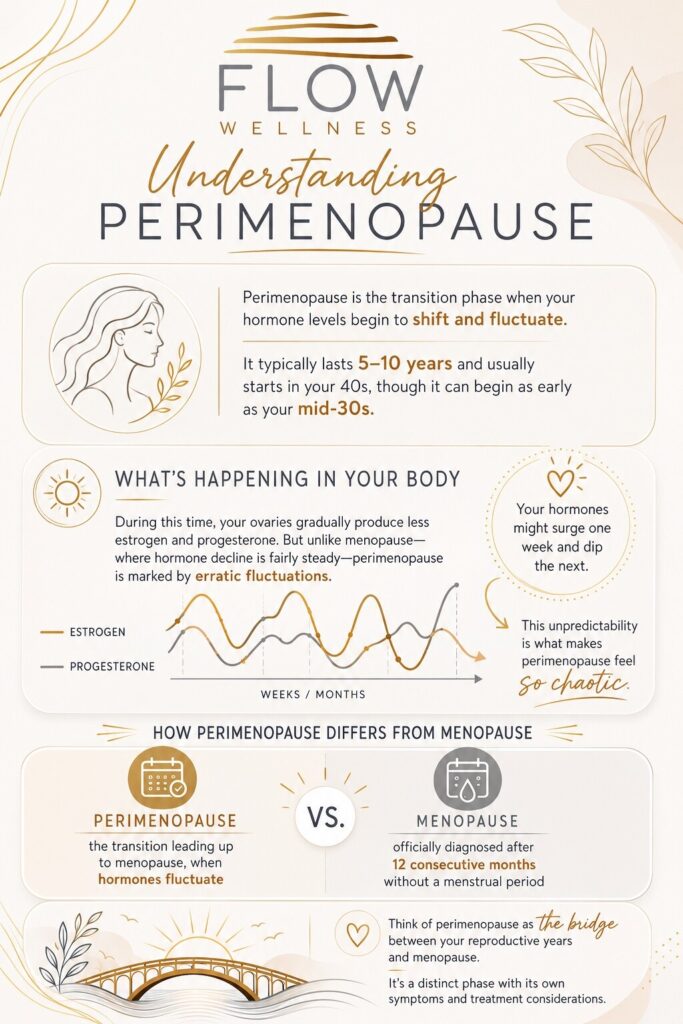
Perimenopause is the transition phase when your hormone levels begin to shift and fluctuate. It typically lasts 5 – 10 years and usually starts in your 40s, though it can begin as early as your mid-30s.
During this time, your ovaries gradually produce less estrogen and progesterone. But unlike menopause – where hormone decline is fairly steady – perimenopause is marked by erratic fluctuations. Your hormones might surge one week and dip the next. This unpredictability is what makes perimenopause feel so chaotic.
How Perimenopause Differs from Menopause
Perimenopause = the transition leading up to menopause, when hormones fluctuate
Menopause = officially diagnosed after 12 consecutive months without a menstrual period
Think of perimenopause as the bridge between your reproductive years and menopause. It’s a distinct phase with its own symptoms and treatment considerations.

When Does Perimenopause Start?
Perimenopause typically begins in your early to mid-40s, though the range is wide:
- Earliest: Mid-to-late 30s (especially after stress, major life changes, or certain health conditions)
- Most Common: Ages 40–45
- Later: Late 40s or early 50s
Average duration: 5 – 10 years (though some women experience it in as little as 2–3 years, while others navigate it for a full decade)
There’s no “right” age to start perimenopause – every woman’s timeline is different. What matters is recognizing the signs early so you can address them before symptoms escalate.
The Two Stages of Perimenopause
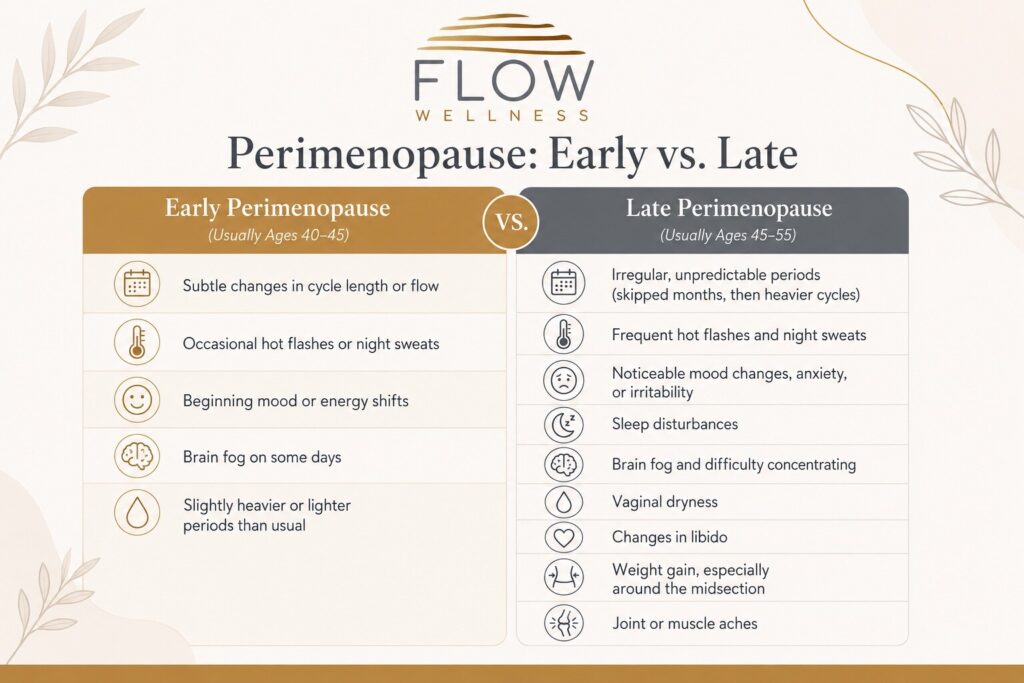
Early Perimenopause (Usually Ages 40–45)
During early perimenopause, your cycle may remain relatively regular, but you might notice:
- Subtle changes in cycle length or flow
- Occasional hot flashes or night sweats
- Beginning mood or energy shifts
- Brain fog on some days
- Slightly heavier or lighter periods than usual
Many women don’t recognize early perimenopause because symptoms are mild and inconsistent. Labs often still look “normal” because hormone levels haven’t declined as sharply yet.
Late Perimenopause (Usually Ages 45–55)
Late perimenopause is when symptoms typically intensify:
- Irregular, unpredictable periods (skipped months, then heavier cycles)
- Frequent hot flashes and night sweats
- Noticeable mood changes, anxiety, or irritability
- Sleep disturbances
- Brain fog and difficulty concentrating
- Vaginal dryness
- Changes in libido
- Weight gain, especially around the midsection
- Joint or muscle aches
You’re close to menopause during this stage (though you may still have years of transition ahead).
Common Perimenopause Symptoms
Many women experience multiple symptoms simultaneously – and they can feel unpredictable. If you answer “yes” to three or more of these, perimenopause may be playing a role:
Vasomotor Symptoms
- Hot flashes (sudden intense heat, flushing, sweating)
- Night sweats (waking drenched, disrupting sleep)
- Chills or feeling cold when others don’t
- Sensation of heart racing or palpitations
Menstrual Changes
- Irregular cycle length (shorter or longer than usual)
- Skipped periods (then return unexpectedly)
- Heavier or lighter flow than before
- Longer or shorter duration of bleeding
Sleep & Energy
- Insomnia or difficulty falling asleep
- Waking multiple times per night
- Unrefreshing sleep despite sleeping 7–8 hours
- Daytime fatigue or exhaustion
Mood & Cognition
- Irritability or mood swings
- Anxiety or panic attacks
- Low mood or depression
- Brain fog or “fuzzy” thinking
- Difficulty concentrating or memory lapses
- Reduced motivation
Sexual & Physical Health
- Low libido or reduced sexual desire
- Vaginal dryness or discomfort during intimacy
- Joint or muscle aches (especially knees, hips, shoulders)
- Headaches or migraines
- Thinning hair or dry skin
Metabolic Changes
- Weight gain (especially around belly, hips, thighs)
- Difficulty losing weight despite diet/exercise
- Increased appetite or cravings
- Slower metabolism
Other Symptoms
- Breast tenderness
- Bloating or gas
- Tension headaches
- Restless legs at night
Not every symptom means you’re in perimenopause – but patterns of multiple symptoms, especially alongside irregular cycles, often point to hormonal shifts.

Perimenopause vs. Menopause: What’s the Difference?
| Aspect | Perimenopause | Menopause |
|---|---|---|
| What It Is | Transition phase; hormones fluctuate | Medical event; 12 consecutive months without period |
| Duration | 5–10 years (average) | One day (the date of your last period) |
| Menstrual Cycles | Irregular; unpredictable | Stopped completely |
| Hormone Levels | Erratic, fluctuating highs and lows | Consistently low |
| When It Happens | Typically ages 40–55 | Average age 51 in US |
| Symptom Pattern | Come and go; unpredictable | Often stabilize over 1–2 years post-menopause |
| Hot Flashes | Common; can be intense | Common; often continue into postmenopause |
| HRT Timing | Can start during perimenopause | Can start at menopause; continues as needed |
Key Insight: Perimenopause is the years-long transition; menopause is the single moment that marks its official end. Most women spend far more time managing perimenopause than they do postmenopause – which is why early support matters.
Not sure whether it’s hormones, metabolism, or stress? That’s exactly what our clinician-guided midlife program is designed to pinpoint — with advanced labs and scans instead of guesswork.

Hormone Testing During Perimenopause
What’s Actually Happening
During perimenopause, your body is trying to regulate two declining hormones – estrogen and progesterone – but the levels are erratic. Some days your estrogen surges (hot flashes), other days it dips (mood crashes). Your progesterone may be lower than your estrogen, leading to anxiety and sleep disruption.
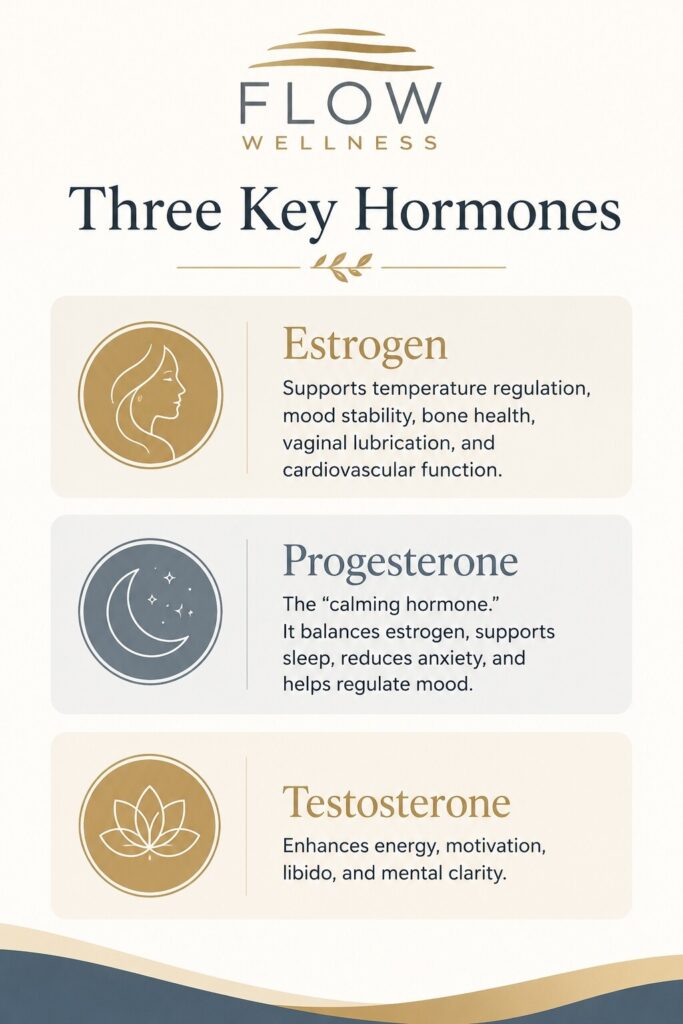
The Three Key Hormones
Estrogen
Supports temperature regulation, mood stability, bone health, vaginal lubrication, and cardiovascular function. When it fluctuates, you feel hot flashes, mood swings, and vaginal dryness.
Progesterone
The “calming hormone.” It balances estrogen, supports sleep, reduces anxiety, and helps regulate mood. Low progesterone during perimenopause often leads to insomnia and anxiety.
Testosterone
Often overlooked in women, but crucial for energy, motivation, libido, and mental clarity. Testosterone declines alongside estrogen and progesterone during perimenopause.
Understanding Your Hormones During Perimenopause
Should You Get Lab Work?
Yes, but with an important caveat: Standard hormone labs can be misleading during perimenopause because levels are constantly fluctuating.
A single blood test may show “normal” levels on the day you’re tested, but your hormones could be completely different the next day. This is why many women are told their labs look “fine” even though they feel terrible.
What Flow Wellness Does Differently
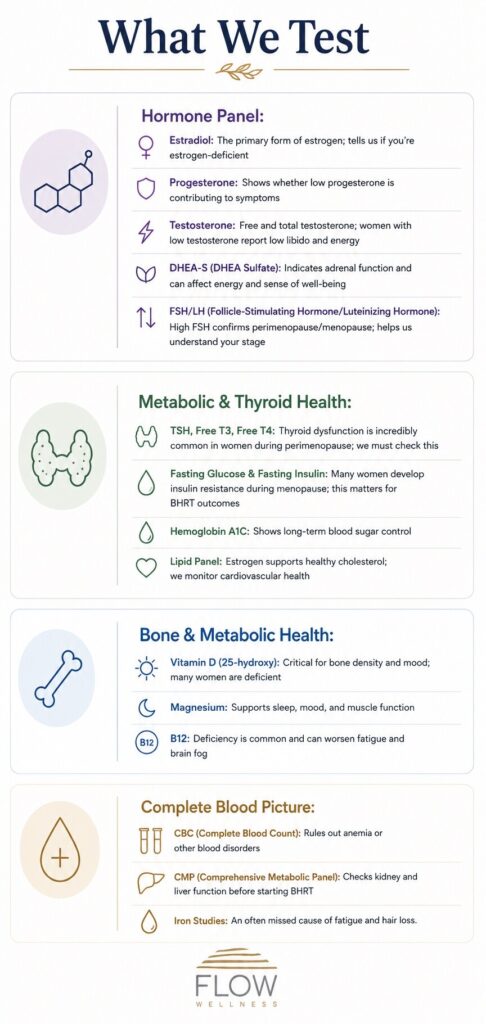
At Flow Wellness, we evaluate you based on symptoms + patterns + labs, not just lab numbers alone.
We typically order:
- Estradiol (the most active form of estrogen)
- Progesterone (especially important during perimenopause)
- Testosterone (to assess energy and libido drivers)
- FSH (follicle-stimulating hormone; elevated during perimenopause/menopause)
- Thyroid panel (thyroid issues often mimic perimenopause symptoms)
- Metabolic markers (fasting glucose, lipids, metabolic health)
But the labs are just one piece. We also listen deeply to your symptoms, your cycle patterns, your sleep, your mood, and your goals. This combination gives us a much clearer picture than labs alone.
Bioidentical Hormone Replacement Therapy (BHRT) for Perimenopause
Is BHRT Right for Perimenopause?
Yes – if your symptoms are significantly impacting your quality of life.
Many women think they need to wait until menopause to start hormone support. You don’t. Bioidentical hormone replacement therapy can be remarkably effective during perimenopause, restoring hormone balance before symptoms become severe.
Why BHRT Works So Well in Perimenopause
Because perimenopause is marked by erratic fluctuations, steady-dose bioidentical hormones (especially via transdermal methods) help stabilize the ups and downs. Instead of riding the hormone roller coaster, you’re creating a steadier baseline that your body can work with.
What Perimenopause BHRT Typically Includes
Progesterone (often the first line of support)
Many women find progesterone alone makes a huge difference during perimenopause—especially for sleep, anxiety, and mood. Micronized progesterone is highly effective.
Estradiol (if progesterone alone isn’t enough)
Low-dose estradiol can ease hot flashes, support bone health, and stabilize mood without overloading your system.
Testosterone (in lower doses)
Some women benefit from low-dose testosterone to restore energy, motivation, and libido during perimenopause.
Duration: Many women use BHRT through perimenopause and menopause (5–10+ years), then reassess at postmenopause.
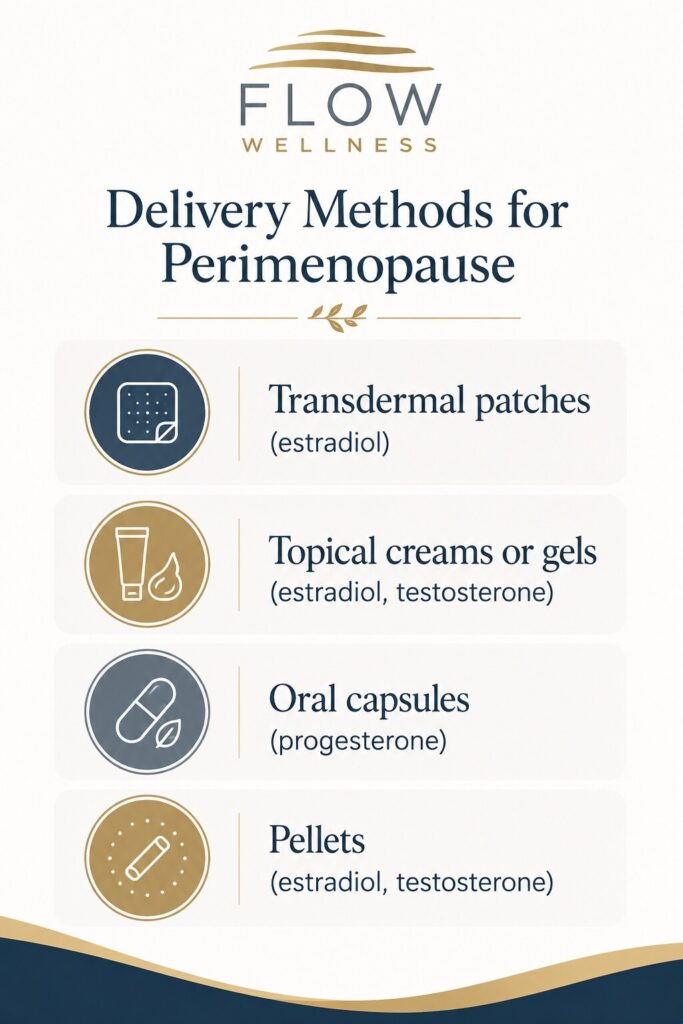
BHRT Delivery Methods for Perimenopause
Transdermal patches (estradiol)
Provide steady hormone levels throughout the day; avoid peaks and valleys. Especially helpful for perimenopause because fluctuations are minimized.
Topical creams or gels (estradiol, testosterone)
Flexible dosing; easy to adjust. Good for women who want control over timing (e.g., progesterone at night for sleep).
Oral capsules (progesterone)
Micronized progesterone is well-studied and effective, especially for sleep and anxiety. Take at night.
Pellets (estradiol, testosterone)
Long-acting (3–4 months); hands-off approach. Good for women who want consistency without daily application.
Why transdermal or pellets + progesterone work best in perimenopause:
Because your hormones are already erratic, steady-dose delivery (patches or pellets) helps normalize the chaos. Oral methods create peaks and valleys, which can amplify perimenopause’s unpredictability.

What to Expect: Perimenopause Timeline with BHRT
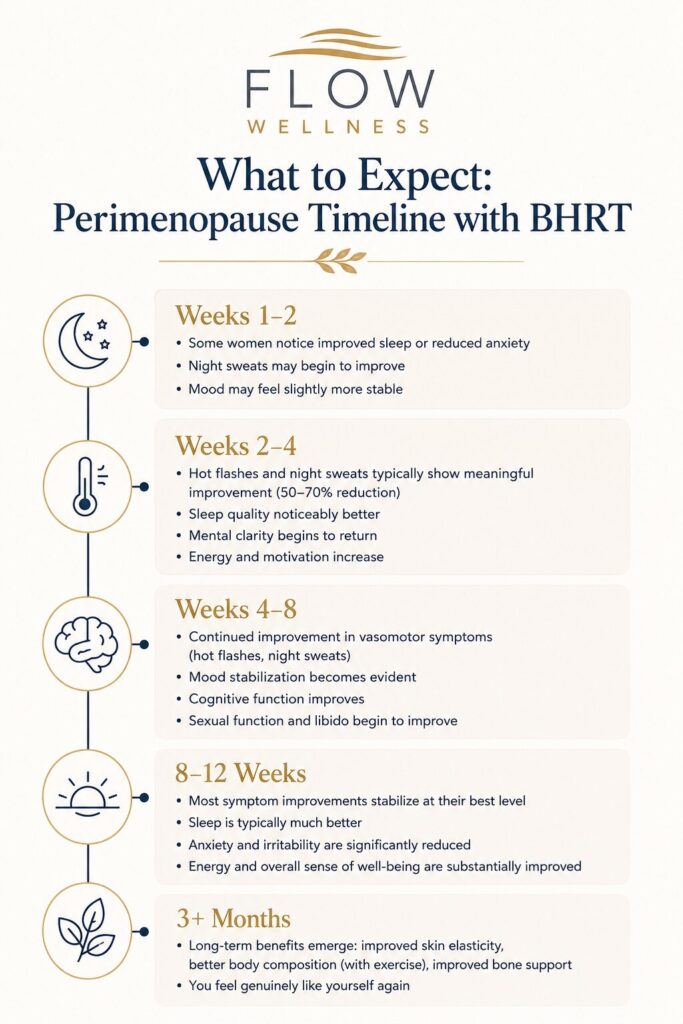
Weeks 1–2
- Some women notice improved sleep or reduced anxiety
- Night sweats may begin to improve
- Mood may feel slightly more stable
Weeks 2–4
- Hot flashes and night sweats typically show meaningful improvement (50–70% reduction)
- Sleep quality noticeably better
- Mental clarity begins to return
- Energy and motivation increase
Weeks 4–8
- Continued improvement in vasomotor symptoms (hot flashes, night sweats)
- Mood stabilization becomes evident
- Cognitive function improves
- Sexual function and libido begin to improve
8–12 Weeks
- Most symptom improvements stabilize at their best level
- Sleep is typically much better
- Anxiety and irritability are significantly reduced
- Energy and overall sense of well-being are substantially improved
3+ Months
- Long-term benefits emerge: improved skin elasticity, better body composition (with exercise), improved bone support
- You feel genuinely like yourself again
Individual timelines vary. Your provider may adjust dosage or delivery method during the first 3–6 months to optimize your results. Regular monitoring ensures you’re getting the best outcome.
Ready to Explore Perimenopause Support?
If perimenopause symptoms are affecting your energy, sleep, mood, or quality of life, we’d like to help.
Next Steps:
Schedule a Free Informational Call
Chat with one of our hormone specialists about your symptoms, timeline, and whether BHRT might be right for you. No pressure—just conversation.
Book a Comprehensive Hormone Consultation
Ready to dive deeper? Schedule a hormone consultation where we’ll review your symptoms, run comprehensive labs, and discuss a personalized treatment plan tailored to your unique perimenopause experience.
Stronger & Healthier After 40
Measure what’s actually changing after 40 — hormones, metabolism, and body composition — and get a six-month, clinician-guided plan built around your results. Schedule a call to learn more.

Learn More About Women’s Bioidentical HRT
Perimenopause is often the first phase where BHRT makes a real difference. But hormone support extends through menopause and beyond.
Explore Comprehensive Women’s Hormone Optimization →
Learn about the broader HRT journey: Understanding Hormone Replacement Therapy →
About Flow Wellness:
The Pacific Northwest Premier Wellness Clinic
Flow Wellness specializes in personalized bioidentical hormone replacement for women navigating perimenopause, menopause, and beyond. We combine comprehensive hormone testing, individualized treatment plans, and ongoing monitoring to help you feel like yourself again.
Locations:

Medically reviewed by Kevin Jones, MD – Medical Director, Flow Wellness
Member: Menopause Society, BHRT Training Academy
Last updated: August 2026
 5.05.0Top Rated Wellness ClinicVerified by TrustindexTop Rated Wellness Clinic
- 5.0 Excellent rating Last 12 months
- New reviews collected regularly Recent review activity detected
- Leading Wellness Clinic Google Maps rating and review data
- Responds to customer reviews 100% response rate within 48 hours
- Verified by Trustindex Based on real customer reviews Learn more
Posted on Google
 Joseph D'Angelo7 days ago
Trustindex verifies that the original source of the review is Google.
Extremely professional and genuinely concerned about your health. I’m seeing Allison Jones now and she is excellent!Posted on Google J S8 days agoExcellent service.Posted on Google
 Stacy Moch20 days ago
Trustindex verifies that the original source of the review is Google.
The Flow Wellness team is always willing to provide support without judgement.Posted on Google Shelley Lewis-Leander27 days agoI was extremely impressed with Kerry, she explained and answered my concerns and questions. I felt very comfortable and supportive.Posted on Google
 Amy Margolis62 days agoVery professional, knowledgeable and extremely personable. Did not feel rushed and answered all my questions.Posted on Google
 Jenn Masse68 days agoI had questions, Jill had answers. I am really appreciative of the time Jill took with me to understand my background, validate how I was feeling, evaluate various options for care and chat about next steps. Thank you!Posted on Google
 Marti OI'Doherty77 days agoHad a very positive experience with Kerry. She answered all the questions I had. We went over my body composition scan. Loved their format. Easy to read and understand. Recommend Flow Wellness out of Bend Oregon. So glad I am using them for my weight loss journey and new life style changes.Posted on Google
 Jordan Schwartz77 days agoVictoria is the absolute best!! I have been thrilled with my experience so far and the attentiveness of this company.Posted on Google
 The Club Salon79 days agoGreat customer service the whole staff, Dr. Jones very easy to talk to and prompt on calls. Thank you.Posted on Google
 Hanna Drozd79 days agoAlways a pleasure to have a conversation with them. They are very accurate and professionalPosted on Google
 Carol Manning89 days agoEveryone was so kind and very informative. I felt comfortable, feeling I was in good hands. I will be starting glp1 in a week, and so excited to see the results. Highly recommend!Posted on Google
 Colleen Lacter105 days agoThoughtful professionals. Extremely helpful!Posted on Google
 Gwendolyn Hamilton112 days agoVictoria was a dream to work with! I could not recommend her enough.Posted on Google
 Shelley Jones117 days agoFriendly and very knowledgeable staff!Posted on Google
 Marla Cummins120 days agoAll of the healthcare providers are very knowledgeable about the medication‘s being prescribed for weight loss. They also have a monthly publication that keeps us up-to-date on changes and new information regarding the medications. Kerry was my healthcare provider and she was Professional, empathetic, and knowledgeable. I was able to get a hold of her whenever I needed too with questions and concerns. She always responded promptly. I highly recommend Flow Wellness in Bend, Oregon.Posted on Google
 John Minor125 days agoGreat staff, comfortable environment, just signed up for monthy sessions ❤️Posted on Google
 Patrick Cabral149 days agoWhat a great business. I have been working with Flow Wellness for about 4 months and I find this company to be dedicated to the business of individual wellness. My treatment is managed by Holli Miller, FNP and it has been excellent. What I find refreshing is I have never been pushed on buying anything. Holli, like the Flow team provides me with options and recommendations which don't just focus on providing medicine but also lifestyle changes. They offer a host of services but again, never pushed. I feel comfortable in discussing my weight loss journey with the Flow team. If you read this, also check out the vast library of articles the Flow team have. I know weight loss is not just taking a shot and the Flow team with Holli don't just sell GLP-1s, they "provide" a plan and support for a successful wellness lifestyle. Highly recommend Flow to anyone. Even if you are just looking, there is NO pressure. Definitely worth a look.Posted on Google
 Adria Peet160 days agoVictoria Streetman was very helpful and professional! Looking forward to my Peptide journey!Posted on Google
 Angelina Anello-Dennee169 days agoI just did an initial intake and it was so lovely and thorough. I found the experience to be super welcoming, and gave me a lot of knowledge that I needed to make the decisions I wanted to make. Wonderful staff!Posted on Google
 Dennis Maddelein169 days agoVery positive first encounter with Flow Wellness. All the people I met were very courteous and attentive with a big smiles on their faces. I had my questions answered by Holly and I felt very comfortable. Happy to do business with flow wellness.
Real Stories of Real Progress with HRT
That staff at Flow Wellness, Bend were very polite, professional and very informative. The facility is very nice as well. Definitely recommend them and their treatment plans.
Rod
My doctor was friendly and professional. The process was convenient and simple. I appreciated receiving all the tools needed to support my success.
Kerry
Flow Wellness provides a comfortable and safe container for a transformative healing journey. I am so grateful to have encountered such cutting edge TLC.
Kate
After reviewing all of the information my significant other and I decided on Flow Wellness. I was pleasantly surprised that the provider had reviewed my health history and medications prior to visit. She answered all the questions and offered amazing tips and advice. I am looking forward to doing business with this company!
Charlene
Your HRT Journey at Flow Wellnes:
Step 1: Initial Consultation ($349)
- Meet with a clinician to discuss your symptoms, health history, and goals
- Comprehensive evaluation of what’s been changing and how it’s affecting you
Step 2: Comprehensive Lab Testing
Step 3: Personalized Treatment Plan
- Your provider will create a customized plan based on your body, your symptoms, and your goals
Our Program:
The Flow Wellness Thrive monthly membership includes:
- A dedicated provider focused on helping you reach your health goals through monthly check-ins, unlimited provider messaging, and exclusive discounts on additional Flow Wellness services and medications.
- This ongoing support provides a personalized approach to help you make steady, sustainable progress toward your goals.
- $189 per month
Ready to Reclaim Your Vitality?
- Women’s hormonal health is foundational to overall wellness. When your hormones are balanced, everything feels more consistent – your energy, mood, sleep, relationships, and sense of self.
- If you’re experiencing perimenopause, menopause, or any of the symptoms outlined on this page, the next step is simple: schedule a consultation with one of our providers.
Related Hormone Replacement Resources

Exercise and Menopause: What Works in 2026
What You’ll Learn Exercise and menopause require a different strategy than what worked in your 20s or 30s. This guide explains how menopause affects muscle,

How Progesterone Supports Better Sleep: The Science of Nature’s Relaxation Hormone
Progesterone is a neurosteroid that crosses the blood-brain barrier and converts to allopregnanolone, a compound that enhances GABA, your brain’s primary calming neurotransmitter. This GABA

I Wish I Started Hormone Support in My Early Forties
You can benefit from hormone support earlier than you think. When women begin hormone support in their early forties, they’re far less likely to find
Frequently Asked Questions About Perimenopause
Is perimenopause normal?
Yes. Perimenopause is a natural stage of life that every woman experiences as hormone levels begin to change before menopause. While the transition is normal, disruptive symptoms are not something you simply have to accept. At Flow Wellness, we help women understand what’s happening and provide evidence-based treatment options to support their health and quality of life.
What is the difference between perimenopause and menopause?
Perimenopause is the transition period before menopause when hormone levels begin fluctuating and symptoms may start. Menopause is officially diagnosed after 12 consecutive months without a menstrual cycle. Flow Wellness helps women navigate both stages with individualized care.
What hormones are commonly used in women’s HRT?
Women’s hormone therapy at Flow Wellness may involve estrogen, progesterone, and sometimes testosterone depending on symptoms, lab work, and treatment goals.
Can hormone therapy help with sleep and mood?
Many women seek treatment at Flow Wellness because hormone changes may affect sleep quality, emotional balance, stress tolerance, and mental clarity. Treatment plans are individualized based on each patient’s needs and goals.
Can hormone therapy help with weight gain and metabolism?
Hormones can significantly affect metabolism, body composition, energy levels, muscle maintenance, and fat storage. Flow Wellness often evaluates hormone health alongside metabolic wellness to help patients improve energy, muscle mass, recovery, and long-term body composition.
Does Flow Wellness offer bioidentical hormone therapy?
Flow Wellness recommends bioidentical hormone options when appropriate as part of a personalized hormone treatment plan.
Can perimenopause symptoms get better on their own?
Some symptoms may improve over time, especially with healthy lifestyle habits such as regular exercise, quality sleep, stress management, and balanced nutrition. However, many women experience symptoms that significantly affect daily life for several years. If symptoms are interfering with your sleep, mood, relationships, or work, bioidentical hormone replacement therapy (BHRT) at Flow Wellness may help support symptom relief while your body transitions.
Can women use testosterone therapy?
Yes. Testosterone can play an important role in women’s energy, libido, strength, motivation, and overall wellness when clinically appropriate. Flow Wellness carefully evaluates dosing and monitoring for women considering testosterone therapy.
What makes Flow Wellness women’s hormone therapy different?
Flow Wellness focuses on personalized, long-term wellness care rather than symptom-only treatment. Women receive individualized treatment planning, provider access, metabolic evaluation, and ongoing monitoring designed around their goals and lifestyle.
Can hormone therapy be combined with other wellness treatments?
Do you accept insurance?
Flow Wellness does not bill insurance. Working outside of insurance gives us the flexibility to offer longer appointments, cutting-edge treatments, and direct communication without pre-approvals or care limitations. You get transparency, accessibility, and the care you truly need.
Is bioidentical hormone replacement therapy (BHRT) safe for women?
Yes, when prescribed and monitored by qualified healthcare providers, BHRT is safe for most women. Modern bioidentical hormone therapy has an excellent safety profile. That said, BHRT isn’t appropriate for everyone. Women with personal or family history of breast cancer, blood clots, or stroke may not be candidates. Comprehensive medical evaluation is essential before starting. At Flow Wellness, we conduct thorough screening, including hormone testing, cardiovascular assessment, and personal/family health history review, to ensure BHRT is safe and appropriate for you. We monitor you regularly with follow-up visits and lab work to optimize results and catch any concerns early. The bottom line: BHRT is safe when prescribed appropriately, monitored regularly, and adjusted as your health needs change.
How long will I need to take BHRT?
What's the difference between BHRT and conventional HRT?
How much does women's HRT cost?
Initial Consultation (with lab follow up): $349
Includes a comprehensive 1-hour consultation with your provider, personalized lab order, and a follow-up visit to review results and build your treatment plan. You will have comprehensive assessment and plan after this consultation. Comprehensive lab panel can be billed via insurance or cash pay for $249.Ongoing Support: $189/month
Our Thrive Membership is designed to support your HRT journey long-term. You get:- Monthly check-ins with your dedicated provider
- Unlimited messaging between visits
- Prescription management and adjustments
- 10% discount on all Flow Wellness products (compounded hormones, peptides, supplements) as well Fullscript supplements
- Standard pharmacy medications called into your pharmacy at no extra charge
- Flexible, personalized care built around your lifestyle
What About Medication Costs?
Compounded bioidentical hormones typically range from $100–$300/month depending on your specific formulation and delivery method (pellets, creams, troches, capsules). We work with you upfront to find options that fit your budget without compromising results.Why the Investment Pays Off
Most patients report the quality-of-life improvements alone – better sleep, restored energy, clearer thinking, renewed libido – justify the cost within the first few months. Add in the long-term health benefits (bone density, cardiovascular support, metabolic health), and HRT becomes preventive medicine, not just symptom relief.
What if BHRT doesn't improve my symptoms?
Can I start BHRT during perimenopause, or do I have to wait until menopause?
Can I use BHRT if I still have my uterus?
When should I start thinking about women's HRT?
How do I know if I'm a good candidate for women's HRT?
Is BHRT different during perimenopause than during menopause?
Can I reduce perimenopause symptoms naturally?
Healthy lifestyle habits can make a meaningful difference. We encourage:
- Strength training and regular physical activity
- Seven to nine hours of quality sleep
- Stress reduction practices
- Adequate daily protein intake
- Limiting excess alcohol and caffeine
- Maintaining a healthy body composition
These strategies work well on their own and may provide additional support when combined with BHRT.
Is perimenopause a good time to focus on overall wellness?
Absolutely. Perimenopause is an excellent opportunity to take a proactive approach to long-term health. In addition to hormone optimization, many women choose to incorporate body composition analysis, medical weight management, peptide therapy, IV nutrient therapy, or targeted nutritional support. Your provider can help develop a personalized wellness plan that aligns with your goals.
Medical Disclaimer: The information provided in this article is for educational purposes only and should not be considered medical advice. At Flow Wellness, hormone replacement therapy is prescribed only after a comprehensive medical evaluation to determine whether treatment is appropriate. Every treatment plan is individualized based on your symptoms, medical history, laboratory results, and health goals. Always consult a qualified healthcare provider before making decisions about hormone therapy.