
The Weird, Awkward, Surprisingly Common Things Nobody Warned You About
If you’re taking a GLP-1 medication like Ozempic, Wegovy (semaglutide), Zepbound, or Mounjaro (tirzepatide), chances are you’ve already asked yourself at least once:
“Wait… is this normal?”
Usually, the answer is yes.
GLP-1 medications change much more than appetite. They affect digestion, hormones, inflammation, blood sugar, hydration, cravings, food preferences, and even how quickly things move through the GI tract. Consequently, patients often notice changes that are surprising, slightly awkward, and occasionally impossible to discuss politely at brunch.
At Flow Wellness, we promise: we have heard it all.
So let’s talk about the weird stuff.
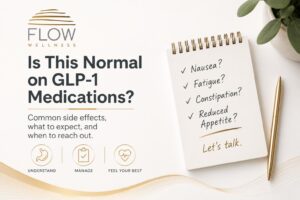
Your Poop Might Change Personality
Let’s start with the obvious.
Because GLP-1 medications slow gastric emptying and digestion, bowel habits commonly change. That means:
- constipation
- softer stools
- smaller stools
- less frequent bowel movements
- occasional diarrhea
All of this can be normal.
Additionally, many patients are eating far less food overall, especially processed foods. Less intake often means less volume. So yes, sometimes people become deeply concerned because they are “barely pooping.” Meanwhile, they’re eating half a protein shake and three almonds daily.
Your digestive system is simply adjusting.
However, severe abdominal pain, persistent vomiting, inability to keep fluids down, or prolonged severe constipation should absolutely be evaluated.
Helpful tips:
- prioritize hydration
- increase protein
- add fiber
- walk daily
- magnesium glycinate or citrate in the evenings before bed
- don’t ignore ongoing constipation for weeks
And yes, coffee still works remarkably well for many people.
Your Period May Become More Regular… or Less Regular
This surprises many patients.
GLP-1 medications can indirectly affect hormones through:
- weight loss
- insulin sensitivity
- inflammation reduction
- cortisol changes
- body fat changes
- improved metabolic function
As a result, some women suddenly develop:
- more regular cycles
- ovulation after years of irregular periods
- heavier periods
- lighter periods
- spotting
- temporary cycle changes
Patients with PCOS especially may notice significant hormonal shifts. Additionally, rapid weight loss itself can temporarily disrupt cycles. The body sometimes interprets large metabolic changes as a stressor.
This is often temporary, but it’s still important to discuss major changes with your provider, especially:
- very heavy bleeding
- prolonged bleeding
- missed periods
- severe pelvic pain
- postmenopausal bleeding
Also worth mentioning: fertility may improve unexpectedly.
Yes, really. There are now entire corners of the internet dedicated to “GLP-1 surprise babies.”
Food Suddenly Seems… Weird
Many patients notice:
- less interest in alcohol
- reduced cravings
- less emotional eating
- feeling “grossed out” by greasy foods
- random food aversions
- inability to finish restaurant meals
Some even say food becomes “emotionally neutral” for the first time in years.
Others suddenly cannot tolerate:
- fried foods
- sugary foods
- heavy cream sauces
- giant portions
This is extremely common.
Your brain’s reward pathways and appetite signaling are changing. In many patients, the “food noise” finally quiets down.
On the other hand, some patients accidentally undereat because they simply stop thinking about food altogether. That is not necessarily a win.
Long-term success on GLP-1 medications still requires:
- adequate protein
- hydration
- resistance training
- muscle preservation
- nutrition support
You May Feel Cold
This one catches people off guard constantly.
Patients often say:
- “Why am I freezing?”
- “I suddenly need socks all the time.”
- “My office has become the Arctic.”
There are several possible reasons:
- lower calorie intake
- lower inflammation
- weight loss
- less body insulation
- lower blood sugar swings
Sometimes it improves over time. Sometimes patients just adapt to brining sweatshirts with them all the time.
Your Tolerance for Alcohol May Change
This is a big one.
Many patients notice:
- alcohol hits harder
- they lose interest in drinking
- nausea occurs faster
- hangovers worsen
- even small amounts feel unpleasant
GLP-1 medications slow stomach emptying, which can change how alcohol is absorbed.
Additionally, patients are often eating less overall, which lowers alcohol tolerance further. Hydration matters even more than usual here.
Hair Shedding Can Happen
This is usually related to rapid weight loss and inadequate protein intake — not necessarily the medication itself.
When the body experiences significant metabolic change, it sometimes shifts energy away from “nonessential” things like hair growth.
The good news:
- it’s usually temporary
- it often improves as nutrition stabilizes
- adequate protein helps significantly
This is one reason we emphasize:
- protein intake
- muscle preservation
- realistic pacing
- body composition tracking
- long-term metabolic health
Fast weight loss at the expense of nutrition is rarely the goal. Read more about how to keep your hair while losing weight here.
Nausea Is Common — But Constant Misery Is Not
Mild nausea can happen, especially:
- after dose increases
- when eating large meals
- after greasy foods
- when dehydrated
However, patients should not feel severely sick all the time. Many people assume they are “supposed to suffer” on GLP-1 medications.
They are not.
Sometimes patients need:
- slower dose increases
- lower doses
- nutrition adjustments
- anti-nausea medication
- more time between increases
Your Body Composition Matters More Than the Scale
This is one of the biggest mindset shifts we try to teach patients.
Weight loss eventually slows.
That does not mean failure.
Some of the most important improvements happen later:
- inflammation reduction
- insulin resistance improvement
- visceral fat reduction
- muscle preservation
- metabolic stabilization
- improved mobility
- decreased food obsession
- improved labs
- improved confidence
The scale only tells one tiny part of the story.
This is exactly why we encourage:
- body composition scans
- resistance training
- adequate protein
- realistic expectations
- ongoing follow-up
Because the goal is not simply becoming smaller.
The goal is becoming healthier, stronger, and more metabolically resilient long term.
So… Should You Be Concerned?
Usually, these changes are simply signs that your metabolism, hormones, digestion, appetite signaling, and eating patterns are shifting.
Some adjustments are temporary. Others become your new normal. Either way, you should never feel like you have to silently “just deal with it.”
Good GLP-1 care is not simply:
- increasing the dose
- watching the scale
- sending refills forever
It should also include:
- education
- troubleshooting
- body composition support
- muscle preservation
- nutrition guidance
- realistic expectations
- long-term planning
At Flow Wellness, we want patients to ask the awkward questions. Honestly, those are often the most helpful conversations.
Because sometimes the most reassuring thing you can hear is:
“Yes. That’s actually pretty common.”

Tips for Starting GLP-1 Medications
What to Expect When Starting GLP-1 Medication Starting a GLP-1 medication like semaglutide or tirzepatide can feel exciting—and a little overwhelming. You may wonder what

Can GLP-1 Medications Reduce Alcohol Cravings?
GLP-1 Medications and Alcohol Cravings: A New Layer of Support For many people, alcohol—or other substances—aren’t just habits. Instead, they’re often woven into stress relief,
Is Heartburn Normal on GLP-1 Medications?
Heartburn on GLP-1 Medications: Why It Happens and What Helps Heartburn can be an unexpected side effect when starting or increasing a GLP-1 medication. If