When people look for a leading peptide clinic in Seattle, Washington, they’re often seeking more than access to peptide therapies. They want medical expertise, reliable sourcing, and care that applies the same standards used for prescription-based treatment. High-quality peptide therapy is grounded in clinical judgment, evidence, and consistency—not trends or shortcuts.
Below are the key factors that matter most when choosing a peptide clinic in Seattle.
Clinician-Led, Medical Expertise
Peptide therapy works best when it is guided by licensed medical professionals—not offered as a standalone retail service. Top peptide clinics are led by physicians who understand physiology, hormone signaling, and how peptide therapies influence the body over time.
At Flow Wellness, Dr. Kevin Jones and the experienced clinical team have evaluated peptide therapies through both ongoing research review and real-world clinical use. This experience allows them to recommend peptides thoughtfully, with a focus on safety, appropriateness, and measurable outcomes.
Experienced medical oversight includes:
Reviewing health history, symptoms, lab results, and current medications
Aligning peptide therapy with specific goals such as recovery, metabolic health, inflammation, or hormone support
Personalizing dosing instead of using fixed or automated plans
Monitoring response over time and adjusting therapy as physiology changes
This level of supervision is essential for responsible and effective peptide care.
Pharmacy Standards and Safe Sourcing
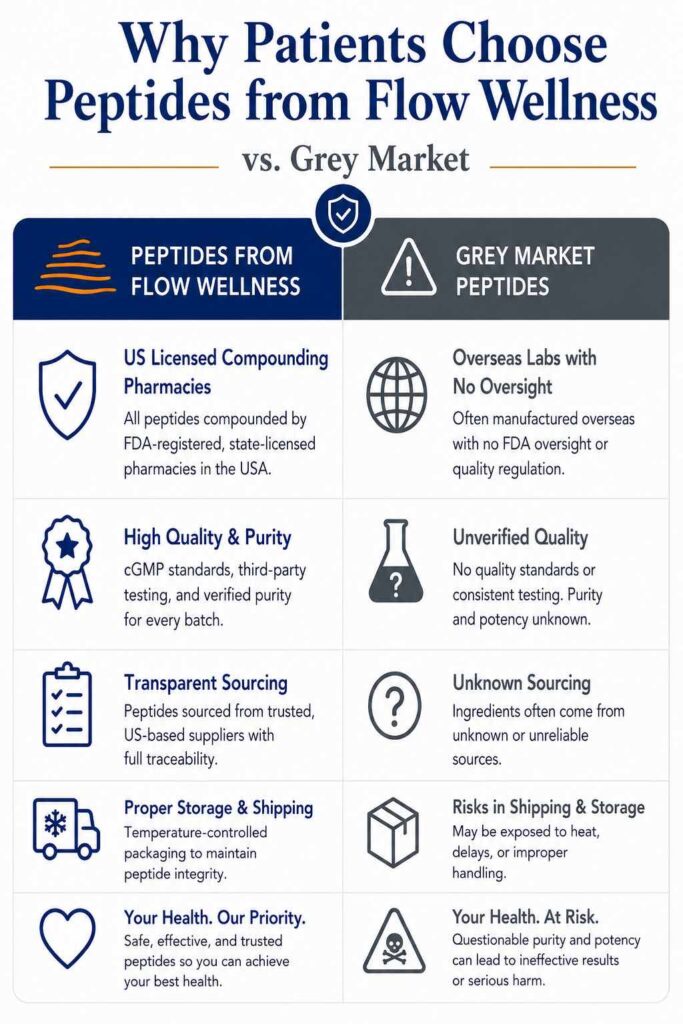
The quality of peptide therapy depends heavily on where the peptides are sourced.
Reputable peptide clinics work only with:
Certified compounding pharmacies
Pharmacies that meet strict sterility and quality-control requirements
Clear documentation and transparent sourcing practices
This approach protects patients from the risks associated with grey-market or research-only peptides, which may have inconsistent purity, incorrect dosing, or unknown contaminants. Products labeled “not for human use” carry that warning for a reason—cutting corners can introduce unnecessary risk.
Structured, Evidence-Informed Protocols
High-quality peptide clinics rely on established medical protocols rather than improvisation.
Well-designed protocols typically include:
Clear criteria for determining candidacy
Defined starting doses with intentional titration plans
Education on storage, handling, and injection technique
Scheduled follow-ups and reassessments
These protocols promote consistency, reduce risk, and support long-term outcomes rather than short-term experimentation.
Body Composition Scans for Objective Tracking
Leading peptide clinics in Seattle offer complementary body composition scans to track progress beyond the scale.
These scans help providers:
Monitor muscle mass, which many peptide therapies aim to preserve or support
Track visceral fat, the metabolically active fat associated with insulin resistance and cardiovascular risk
Differentiate fat loss from muscle loss
Adjust peptides, nutrition, or training using objective data
This data-driven approach ensures peptide therapy supports strength, metabolic health, and sustainable wellness—not just weight changes.
Lab Monitoring for Ongoing Safety
Another defining feature of a high-quality peptide clinic is comprehensive lab monitoring before and during treatment.
Lab evaluation may include:
Baseline testing to confirm candidacy and uncover underlying concerns
Ongoing monitoring of metabolic, hormonal, and inflammatory markers
Follow-up labs to guide dose adjustments
Early detection of imbalances before symptoms escalate
This allows peptide therapy to remain proactive, precise, and aligned with how the body evolves over time.
Personalized, Goal-Oriented Care
No two patients have the same biology or priorities. Whether the goal is recovery, energy, metabolic support, or healthy aging, peptide therapy should be individualized.
That means:
Selecting peptides based on clinical need rather than popularity
Integrating therapy with movement, sleep, nutrition, and lifestyle factors
Reassessing progress regularly using labs and body composition data
How to Identify a High-Quality Peptide Clinic in Seattle
When evaluating peptide clinics in Seattle, look for:
Licensed, experienced medical providers
Partnerships with certified compounding pharmacies
Established, evidence-informed protocols
Body composition scanning to monitor muscle mass and visceral fat
Ongoing lab monitoring for safety and personalization
Peptide therapy can be a valuable tool when used responsibly. Choosing a clinic that prioritizes medical oversight, objective data, and long-term health is the most important step toward results you can trust.