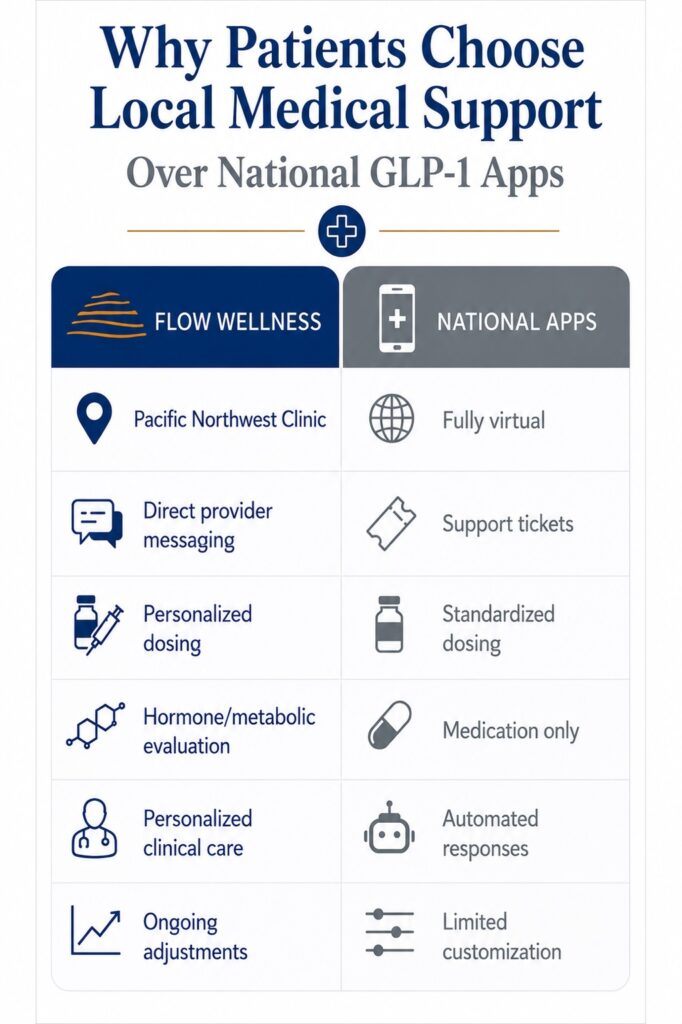
GLP-1 medications like semaglutide and tirzepatide have transformed medical weight loss by helping patients reduce appetite, improve metabolic health, and achieve sustainable weight loss. However, side effects such as nausea, bloating, constipation, fatigue, and appetite suppression can make treatment difficult for some individuals.
One question patients commonly ask is:
“Would splitting my GLP-1 dose into two smaller injections each week reduce side effects?”
The answer is more nuanced than a simple yes or no.
Some patients report improved tolerability with smaller divided doses, while others notice little difference. More importantly, changing your dosing schedule should always be discussed with a licensed medical provider.
This article reviews the potential benefits, risks, and evidence surrounding twice-weekly GLP-1 dosing strategies.
Quick Answer: Can You Split a GLP-1 Dose Twice Weekly?
Some patients may experience fewer side effects by splitting their weekly GLP-1 medication dose into two smaller injections taken several days apart. While this approach is sometimes used clinically, it is considered off-label and should only be done under the guidance of a licensed medical provider.
Splitting doses may help reduce nausea, bloating, fatigue, appetite crashes, and medication “wear-off” symptoms in select patients.
Table of Contents

What Is GLP-1 Dose Splitting?
GLP-1 dose splitting refers to dividing a once-weekly medication dose into two smaller injections spaced throughout the week.
For example:
- Instead of one weekly injection on Monday
- A patient may take half the dose Monday and half Thursday
This strategy is most commonly discussed with:
Ozempic® (semaglutide)
Wegovy® (semaglutide)
Mounjaro® (tirzepatide)
Zepbound® (tirzepatide)
The goal is usually to reduce medication peaks and valleys that may contribute to side effects or appetite fluctuations.
Patients considering this strategy should only do so under provider supervision, especially because some manufacturer pens are not designed for divided dosing.
Why Some Patients Split Their GLP-1 Dose
Many patients tolerate once-weekly injections very well. Others notice symptoms that feel strongest during the first 24–72 hours after an injection.
Common reasons patients ask about split dosing include:
- Nausea after injections
- Bloating or reflux
- Severe appetite suppression
- Fatigue after injections
- Medication “wearing off” late in the week
- Fluctuating hunger levels
- Difficulty eating enough protein
- Trouble maintaining hydration
For some patients, smaller divided doses may create more stable medication exposure throughout the week.
Why GLP-1 Medications Cause Side Effects
GLP-1 medications work by slowing gastric emptying, reducing appetite signaling, and improving insulin regulation.
These mechanisms help support weight loss and blood sugar control, but they can also create gastrointestinal symptoms.
Common GLP-1 side effects include:
- Nausea
- Constipation
- Diarrhea
- Bloating
- Reflux
- Fatigue
- Reduced appetite
- Food aversion
These symptoms are often most noticeable during:
- Dose increases
- The first several months of treatment
- Periods of dehydration
- Poor protein intake
- Inadequate calorie intake
This is one reason why personalized treatment plans matter when using GLP-1 medical weight loss programs.
Can Splitting GLP-1 Doses Reduce Nausea?
For some patients, possibly yes.
Smaller divided doses may reduce the abrupt medication peak that occurs after a single larger weekly injection.
Some patients report:
- Less nausea
- Reduced bloating
- More stable appetite control
- Less fatigue
- Fewer “crash” symptoms
However, responses vary significantly between individuals.
Some patients notice meaningful improvement while others feel no difference.
There is currently limited large-scale clinical research specifically evaluating split-dose strategies in GLP-1 medications, meaning treatment decisions are largely individualized and based on patient response.
Potential Benefits of Twice-Weekly GLP-1 Dosing
1. More Stable Appetite Control
Some patients feel their medication works extremely strongly for several days and then weakens near the end of the week.
Split dosing may create a more even effect.
2. Reduced Nausea
Lower medication peaks may improve tolerability in certain patients.
3. Less Fatigue After Injections
Some patients report feeling excessively tired after injections. Smaller doses may help reduce this effect.
4. Improved Ability to Eat Protein and Hydrate
Over-suppression of appetite can make it difficult to maintain healthy nutrition habits.
This is important because preserving muscle mass during weight loss requires:
- Adequate protein intake
- Strength training
- Micronutrient support
5. Reduced “Wear-Off” Symptoms
The half life of tirzepatide is 5 days. Some patients feel increased hunger or cravings late in the week before their next injection.
Smaller divided doses may reduce these fluctuations.
Possible Risks and Downsides
While dose splitting may help some individuals, there are also potential downsides.
Increased Dosing Complexity
More injections increase the possibility of:
- Dosing confusion
- Missed doses
- Improper measurements
- Medication errors
Off-Label Use
Most FDA-approved GLP-1 medications are designed for once-weekly administration.
Twice-weekly dosing is generally considered off-label.
Not Appropriate for All Injection Systems
Certain prefilled pens are not designed to split doses.
Patients should never attempt to alter manufacturer devices without provider instruction.
Potential for Persistent Side Effects
Some patients may experience ongoing lower-level side effects throughout the week rather than one concentrated period.
What Current Evidence Shows
At this time, there is limited direct clinical research specifically evaluating twice-weekly split dosing strategies for GLP-1 medications.
However, clinicians increasingly recognize that patients respond differently to:
- Dose escalation speed
- Medication sensitivity
- Appetite suppression
- Gastrointestinal tolerance
This is why individualized treatment plans have become increasingly important in modern obesity medicine.
In clinical practice, providers may adjust:
- Titration speed
- Nutrition guidance
- Protein goals
- Fiber intake
- Dose scheduling
The goal is long-term sustainability rather than simply maximizing medication doses.
Who Might Benefit Most From Split Dosing?
Some patients who discuss dose splitting with their provider include:
- Patients with nausea after injections
- Individuals sensitive to medications
- Patients struggling with appetite crashes
- People who feel the medication wears off too quickly
- Patients experiencing fatigue after injections
Not every patient benefits from this approach.
Many patients do extremely well using standard once-weekly dosing.
When You Should Not Split GLP-1 Doses
Dose splitting may not be appropriate for:
- Patients without provider supervision
- Individuals uncertain how to measure medication
- Certain prefilled injection systems
- Patients unable to maintain consistent dosing schedules
Patients should never change dosing schedules without discussing it with their provider first.
Clinically Proven Strategies to Improve Side Effects
Slow Dose Titration
Instead of splitting doses, the proven strategy for minimizing side effects is gradual dose titration—starting low and increasing slowly.
This slow progression is supported by clinical research and recommended by the American Diabetes Association because it allows the digestive system and satiety centers to adapt without overwhelming side effects.
Not everyone needs the highest dose. In fact, most patients do exceptionally well on mid-range doses with fewer side effects.
Your Flow clinician will help find the dose that fits your physiology—not a number on a chart.
At Flow Wellness, we frequently use:
Extended time at each dose
“Half-step” dose increases (or less sometimes!)
Ultra-gradual transitions
These allow your metabolism and digestive system to acclimate without unnecessary discomfort.
Modify Eating Habits
Eat smaller, more frequent meals
Eat slowly and stop when comfortably full
Avoid greasy, fried, spicy, or very heavy foods
Increase water intake
Related reading:
Understand Your Body’s Signals
Learn to distinguish nausea from satiety
Feeling full faster is a normal and healthy medication effect
Fiber Supplementation
Fiber may help reduce constipation associated with GLP-1 medications.
Related reading:
Why Does My GLP-1 Medication Feel Stronger Some Weeks?
Several factors can influence how strongly GLP-1 medications feel, including:
- Calorie intake
- Stress
- Sleep quality
- Illness
- Menstrual cycle changes
- Physical activity levels
This is one reason personalized care matters during long-term treatment.
Can Smaller GLP-1 Doses Still Work?
Yes.
Many patients achieve meaningful results using relatively low or moderate doses, particularly when combining medication with:
- Nutrition improvements
- Strength training
- Sleep optimization
- Consistency
- Lifestyle changes
Higher doses are not always necessary for successful weight loss.

How Flow Wellness Approaches GLP-1 Side Effects
Updated May 2026
At Flow Wellness, treatment plans are individualized based on:
- Side effects
- Weight loss goals
- Muscle preservation
- Nutrition habits
- Lifestyle factors
- Medication tolerance
Our providers help patients optimize:
- Protein intake
- Strength training
- Titration schedules
- Long-term sustainability
We focus on helping patients feel better while achieving sustainable results rather than simply increasing medication doses as quickly as possible.
Flow Wellness provides personalized medical weight loss programs in Bend and Seattle, with telehealth options available across Oregon and Washington.
To learn more about provider-guided treatment options, visit Flow Wellness Medical Weight Loss or Contact Flow Wellness.
FAQ: Splitting GLP-1 Doses
Can splitting GLP-1 doses reduce nausea?
For some patients, smaller divided doses may reduce nausea and digestive side effects by creating less abrupt medication peaks. Responses vary significantly between individuals.
Can you split semaglutide injections into two doses?
Some providers may recommend splitting compounded semaglutide doses in select patients, but this should only be done under medical supervision.
Can you split tirzepatide doses twice weekly?
Certain patients using tirzepatide may discuss split dosing with their provider to improve tolerability or reduce medication wear-off symptoms.
Is splitting GLP-1 medication FDA approved?
Twice-weekly split dosing is generally considered off-label. FDA-approved GLP-1 medications are typically designed for once-weekly use unless otherwise specified.
Does splitting doses help appetite control?
Some patients report more stable appetite control and fewer hunger fluctuations when medication exposure is spread more evenly across the week.
Can splitting doses reduce fatigue from GLP-1 medications?
Some patients experience less fatigue or fewer post-injection symptoms with smaller divided doses, though results vary.
Should everyone split their GLP-1 dose?
No. Many patients do very well with standard once-weekly dosing. Dose splitting is individualized and should be medically supervised.
What should you do if GLP-1 side effects feel too strong?
Patients experiencing severe nausea, vomiting, dehydration, inability to eat, or significant constipation should contact their medical provider.
Sometimes slower titration, nutrition adjustments, hydration support, or medication changes may help.
Key Takeaways
- Some patients may tolerate GLP-1 medications better with split dosing
- Smaller divided doses may reduce nausea, bloating, fatigue, and appetite swings in select individuals
- Twice-weekly dosing is generally considered off-label
- Not every patient benefits from dose splitting
- Long-term success depends on individualized care, nutrition, sleep, and strength training
- Patients should never change dosing schedules without provider guidance
Splitting GLP-1 doses into twice-weekly injections is an off-label, occasionally helpful strategy for very sensitive patients—but it is not an evidence-based standard for managing side effects.
The safest, most reliable approach is a slow, personalized titration schedule, which is the foundation of the Flow Wellness GLP-1 program.
If you’re struggling with side effects, you’re not alone—and you never need to make dosing changes on your own. We’re here to help you feel supported, comfortable, and successful every step of the way.
Life begins when you do™.
What else does Flow Wellness say about GLP-1 dosing?
Medically Reviewed by Flow Wellness
This article was medically reviewed by the Flow Wellness clinical team, including providers experienced in GLP-1 medical weight loss, side effect management, and individualized dosing strategies.